Antisemitism and anti-Jewish persecution
The Painted BirdAntisemitism and anti-Jewish persecution shape both the wartime world of The Painted Bird and the later history of its reception. The novel shows how Jewish identity could become a death sentence under occupation, while the author’s account of the book’s political aftermath describes a campaign that endangered his mother, one of the few surviving members of his family. Together, these strands connect racial persecution not only to state violence but also to the actions and beliefs of neighbors, public institutions, and political agitators.
Wartime classification and danger
After the death of The boy’s foster mother, he wanders among villages whose inhabitants differ from him in appearance and speech. His dark hair, eyes, and skin lead people to classify him as Jewish or Roma. Under German occupation, harboring people identified in either way could expose an individual or community to severe punishment. The boy’s vulnerability therefore arises not from a confirmed identity but from the way others read his body and assign him to a persecuted group.
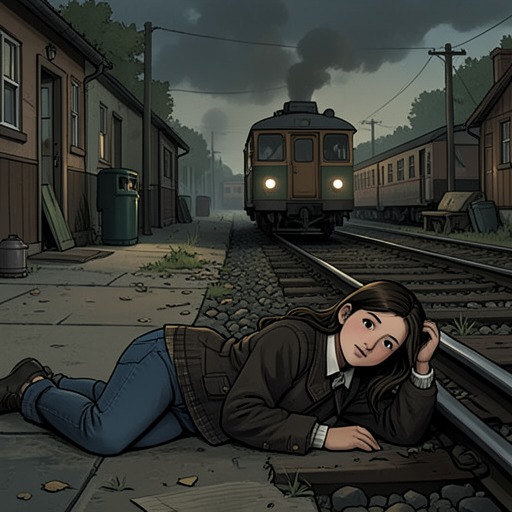
The novel makes that danger visible along a railway through the forest. Villagers learn that locked trains carry Jewish people to their deaths; accounts from people who have worked on a concentration-camp construction site describe the sorting and dispossession of those transported. Rather than respond with compassion, some villagers interpret the deportations as divine punishment, repeating antisemitic religious claims that cast the victims as deserving their fate. Their beliefs turn persecution into a supposed moral order and help explain why the boy is threatened when his neighbors call him both Jewish and Roma.
The trains also expose the difference between looking and witnessing. Villagers line the tracks and wave to train crews and guards, while people inside the cars signal through small windows. The boy observes this public spectacle and the villagers’ curiosity, then encounters the aftermath of nighttime escapes: people search the railway margins, and some strip the dead of clothing and valuables. When a young boy is found after falling from a train, the villagers take his belongings and leave his body where a German patrol is likely to find it. The episode presents persecution as a system sustained not only by those who organize deportations but also by local indifference and opportunism.
Evidence and the problem of representation
In answering critics who accused The Painted Bird of dwelling excessively on cruelty, the author distinguishes the novel from the historical materials he invokes in its defense. He points to testimony by a nineteen-year-old survivor about a village destroyed after sheltering an enemy of the Reich, and to official records and personal accounts concerning the murder of Jewish and Roma people. His examples include camp rules for killing children considered unable to work, records concerning clothing taken from murdered Jewish children, and a Jewish attendant’s diary describing the deaths of Roma children in a camp.
These materials do not make the novel a documentary account of each incident it depicts. They establish the historical context in which its representation of violence must be read, and they challenge the claim that such brutality was merely the author’s invention. Some of his former school friends, who obtained contraband copies, judged the novel less severe than what they and their relatives had endured. The tension between fictional narrative and testimony is central: the novel gives literary form to a child’s exposure to persecution, while the author’s defense insists that the historical record exceeds what many readers were willing to accept.
A recurring image links that record to the boy’s limited understanding. After picking up ash from beside the railway, he fears that the dead remain present and remember the living. The ash becomes, for him, evidence that people have been reduced to remains and that the witnesses cannot simply leave the scene behind. The moment does not explain persecution through an abstract argument; it shows how mass death enters a child’s perception and persists as fear and memory.
Postwar political persecution and family consequences
The author later describes attacks on The Painted Bird as part of a nationalist campaign intended to create instability and drive the remaining Jewish population from the country. Critics accused the novel of portraying identifiable communities, distorting local customs, defaming peasants, or justifying the Soviet presence in Eastern Europe. The author’s account places these accusations within a coordinated political effort rather than treating them as a neutral dispute about literary accuracy. The book itself came to be cast as a threatening outsider, echoing the position of its protagonist, whom others regard as alien and dangerous.
The campaign had direct consequences for The narrator’s mother, who was in her sixties, had undergone two cancer operations, and was the author’s only surviving blood relative. After a newspaper identified her as the mother of a renegade, articles about her helped incite crowds to gather at her house. Police arrived after her nurse summoned them but did not effectively protect her. The author sought support from international organizations; eventually, pressure from organizations outside the country prompted officials to move her to another town. After the assaults subsided, she moved to the capital, leaving her home and possessions behind. The author kept track of her through friends and sent her money.
Although much of her family had been exterminated in the country that now persecuted her, The narrator’s mother refused to emigrate. She wanted to die and be buried beside her husband in the land where she had been born. After her death, authorities prohibited a public funeral announcement, and her death notice appeared only days after the burial. The suppression of even this modest public record extends persecution beyond physical danger: it makes private grief subject to political control.
Meaning and reach
The entry’s distinct settings—the railway, the occupied villages, the camps, and the author’s mother’s later home—show different stages and forms of anti-Jewish persecution without making them interchangeable. Wartime deportation and murder are represented in the novel and supported in the author’s discussion by survivor testimony and camp records; the later campaign uses public denunciation and intimidation against a Jewish family and a book. Across these contexts, classification, public rhetoric, and the failure of authorities to protect those at risk repeatedly turn prejudice into material danger.
The novel’s disputed reception also reveals a conflict over who may speak about persecution and what kinds of evidence readers will recognize. Some critics treated its cruelty as implausible or as exploitation, while survivors and the author’s cited documents point toward violence that exceeded the novel’s account. The subject therefore includes not only the persecution represented in the story, but also the later struggle over whether that representation would be believed—and the consequences of that struggle for the author’s mother.